The light measurement technology has evolved during the years from the old traditional film based photography to one where electronic images are the choice. The imaging recording device is one of the most critical components so understanding the process of how the light images are recorded can increase the quality of the light measurement data.© Copyright 2010 www.spacealliance.ro
The light measurement technology has evolved during the years from the old traditional film based photography to one where electronic images are the choice. The imaging recording device is one of the most critical components so understanding the process of how the light images are recorded can increase the quality of the light measurement data.
Although the charge-coupled device detector functions in an equivalent role to that of film, it has a number of superior attributes for imaging in many applications mentioning only extraordinary dynamic range, spatial resolution, spectral bandwidth, and acquisition speed.
But the most important attribute, the quantum efficiency of a sensor is defined as:
a measure which is strongly depending of the wavelength of the incident light.
Next diagram shows why the CCDs or “charge couple devices” have been chosen as prime sensors. It clearly shows the QE has the highest value and is covering a large wavelength region.
A CCD is an array of small sensing elements called pixels and is built on the semiconductor technology which will be explained in the following section.
...
[Read more]
Based on the operating principle, the CCDs are categorized in four major classes:
-linear CCDs
-interline CCDs
-full frame CCDs
-frame transfer CCDs © Copyright 2010 www.spacealliance.ro
Based on the operating principle, the CCDs are categorized in four major classes:
1. linear
A linear CCD is actually consisting in a single row of pixels which needs to be repositioned by a special mechanism in order to construct the image. By that is a complex system which means is slower and leaves the possibility of potential failures
Bellow is an example of this architecture-Atmel TH7813 CCD chip
credit Atmel
2. interline
An interline CCD consists in pixels which have both a photodetector and a charge storage area which is formed by shielding or masking part of a pixel from light and using it only for the charge transfer process.
Combined together all these pixels form vertical columns that run from the top of the array to the serial register. Active photodiodes (the un-masked ones) collect the incoming light and then the collected and converted electrical signal is quickly shifted in a parallel transfer to the adjacent CCD storage area of each pixel element (the masked grey area). From there rows of image information are read in a parallel fashion, one row at a time, to the serial shift register.
The serial register takes control and sequentially shifts each row of image information to an output amplifier as a serial data stream.
The ...
[Read more]
A very important device on any spacecraft is the one which determines the spacecraft’s attitude. There are many different methods by which the attitude of a satellite can be determined, but one of the mostly widely used is the star tracker. © Copyright 2010 www.spacealliance.ro
Star tracker specifications
A very important device on any spacecraft is the one which determines the spacecraft’s attitude. There are many different methods by which the attitude of a satellite can be determined, but one of the mostly widely used is the star tracker. Other methods for determining attitude exist, but none can reach the precision of a star tracker (arc-seconds accuracy) most of the time being just complementary of it. Therefore, the importance of star trackers on spacecraft is difficult to estimate. An ideal star tracker should be able to find the attitude instantly without chance of error in lost in space conditions and without aid from some other sensors. This should be done in parallel with minimal resources consumed (storage and CPU speed) but the performances versus resources are conflicting constraints and in the end everything is a compromise based on the mission requirements.
The star trackers are functioning by identifying the stars within the field of view and based on this the attitude of the star tracker can be determined, which then can be transformed to the attitude of the spacecraft itself.
Usually each sensor available on the market has special features adapted to its un...
[Read more]
Star sensors measure star coordinates in the spacecraft frame and provide attitude information when these observed coordinates are compared with known star directions obtained from a star catalog. In general, star sensors are the most accurate of attitude sensors, achieving accuracies to the arc-second range.© Copyright 2010 www.spacealliance.ro
Introduction
Researchers in the field of spacecraft dynamics and control are concerned with creating accurate and understandable physical models of satellites. These simulations help to verify principles of motion and to test control designs for both attitude and orbit control.
Within this array of packages, there are specialized applications that may appeal to different aspects of spacecraft modeling, including power, communications or attitude.
This chapter is related to the star tracker system and intends to provide an overview of the major topics in this field.
The star tracker control
Star image processing
Star pattern identification
Attitude estimation
Star sensors measure star coordinates in the spacecraft frame and provide attitude information when these observed coordinates are compared with known star directions obtained from a star catalog. In general, star sensors are the most accurate of attitude sensors, achieving accuracies to the arc-second range. This impressive capability is not provided without considerable cost however. Star sensors are heavy, expensive, and require more power than most other ...
[Read more]
In the ancient times, it was noticed that some lights moved on the sky while the others remained in the same position in relation to each other. Stars which appeared to be closed together were grouped into constellations. Stars which changed their position were called planets and the seven ones observable directly by eye were considered in order of speed of apparent movement Moon, Mercury, Venus, Sun, Mars, Jupiter and Saturn. Today a lot of ancient mysteries have been solved, but much more are still to be investigated.
This article is an introduction to some of the astronomy issues like absolute and apparent magnitude, relation between magnitude and distance, luminosity of a star, star's flux, spectral classes, colour index and temperature of a star, star distance, pa...
[Read more]
Operating a voice system depends largely on the skills of the involved persons. Proper voice procedure training should provide the operators with the basic knowledge of how to improve their skills in the use of radio communication. Even the best systems can suffer from interference and because of this is possible than the other part cannot hear (understand) the information passed. Therefore it is extremely important that proper voice procedure is used to save time. Briefly, a voice procedure is a set of rules designed to provide security, accuracy and discipline when speaking on the voice loop. Phonetic alphabet
Letters, numbers and symbols
It is most important to use the accepted phonetic alphabet for letters and digits for al...
[Read more]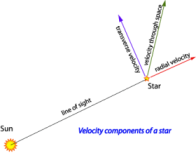
The concept of proper motion in astronomy is defined as the apparent movement of a star on the celestial sphere, usually measured as seconds of arc per year. It is due both to the actual relative motions of the sun and the star through space. The proper motion reflects only transverse motion (the component of motion across the line of sight to the star); it does not include the component of motion toward or away from the sun. The most distant stars show the least proper motion. The average proper motion of the stars that can be seen with the naked eye is 0.1'' per year. The proper motion of a star is its apparent angular movement per year on the celestial sphere. It is a combination of its actual motion through space and its motion relati...
[Read more]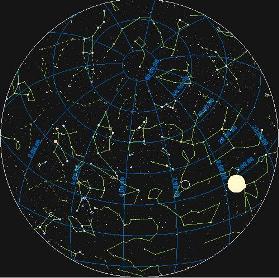
The Hipparcos and Tycho Catalogues are the primary products of the European Space Agency's astrometric mission, Hipparcos. The satellite, which operated for four years, returned high quality scientific data from November 1989 to March 1993. Each of the catalogues contains a large quantity of very high quality astrometric and photometric data.
In addition there are associated annexes featuring variability and double/multiple star data, and solar system astrometric and photometric measurements. Although in general only the final reduced and calibrated astrometric and photometric data are provided, some auxiliary files containing results from intermediate stages of the data processing, of relevance for the more-specialized user, have also been retained for publication. The global data...
[Read more] Spacecraft attitude is briefly the angular orientation of a spacecraft body vector with respect to an external reference frame. A spacecraft attitude determination and control system typically uses several sensors and actuators and because attitude is described by three or more variables (apart from the angles, one can add the rotational speed etc), the difference between the desired and the measured state is complicated to be evaluated, most of the time being either undetermined or over-determined.
The attitude of a spacecraft is its orientation in space. The motion of a rigid spacecraft is specified by its position, velocity, attitude and attitude motion. The first two quantities describe the translation motion of the center of mass of the spacecraft and are the subject of what is variously called celestial mechanics, orbit determination, or space navigation, depending on the aspect of the problem that is emphasized. The latter two quantities describe the rotational motion of the body of the spacecraft about the center of mass. In general orbit and attitude are interdependent.
Attitude analysis may be divided into determination, prediction, and control. Attitude determination is the process of computing the orientation of the spacecraft relative to either an inertial reference or some object of interest such as the Earth. This typically involves several types of sensors on each spacecraft and sophisticated data processing. The accuracy limit is usually determined by a combination of processing procedures and spacecraft hardware.
Attitude prediction is the process of forecasting the future orientation of the spacecraft by using dynamical models to extrap...
[Read more]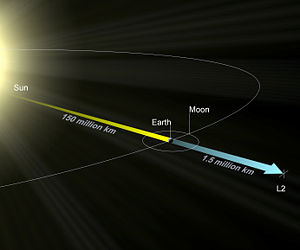
The Lagrangian points are locations in space in the vicinity of two orbiting masses where the gravitational forces and the orbital motion balance each other to form a point at which a third body of negligible mass would be stationary relative to the two bodies.
There are a number of web resources describing the Lagrangian points, some of them offering a very good introduction and description of the 5 Lagrangian points, while others insist on the techical aspects of the problem. Nonetheless, in the following article we'll try to add to the non-mathematical and intuitive descriptions available on the web (like, for instance, the ESA page related to the 5 lagrangian points or the Wikipedia article ) a detailed-mathematical view of the problem, starting from the technical defintion wh...
[Read more] This article intends to give to the reader an overview of the state of the art attitude sensors used for the modern missions.
Attitude determination uses a combination of sensors and mathematical models to collect vector components in the body and inertial reference frames, typically in the form of a quaternion, Euler angles or rotation matrix.
The main sensors available on satellite area are:
Earth sensors
There are different earth sensors available on the market like horizon crossing indicators and horizon scanners. The sensors use the difference of the infrared light emitted by Earth and the one emitted by the deep space in order to detect the horizon, and then they return the vector to the approximate center of the Earth.
Sun sensor
The sun sensors are available in two forms: coarse sun sensors (used usually to determine the attitude of the satellite in a safe mode when the accuracy is not an important issue) and fine sun sensors (used whenever a big accuracy is requested).
Star sensor
They are the most accurate sensors used for attitude determination at the present. It is important that they deliver a full attitude determination, meaning that they don’t need another vector measurement since the measurement of the stars in the field of view already provides an attitude solution.
The process consists in taking a picture of the sky, comparing this picture with a star map stored on board of the spacecraft and based on some specific algorithms identifying the stars found and generating an attitude solution.
Future notes will give the details of the specific star sensors...
[Read more] This article intends to be a summary of the attitude actuators for spacecrafts either active or passive. It will introduce the reader to the basic attitude control hardware in use for the modern platforms.
The attitude control of a spacecraft can be considered being either actively controlled (meaning that a controller calculates necessary control torques and acting on the satellite to adjust its attitude to a desired position) or passively controlled (meaning that the satellite uses external torques that occurs due to its interaction with the environment and thus they cannot be avoided, in this case the disturbances being used for forcing the attitude of the satellite).
In general, the active control assures 3 axes stabilization, while the passive control gives the opportunity for 1 axis stabilization. Some disadvantageous points of the passive actuators are that the pointing accuracy is pretty bad and also that the natural damping is very small meaning that additional energy dissipation devices need to be installed on board of the spacecraft.
A summary of the active actuators include:
Thrusters
The torques generated by the thrusters is considered as external torques since the angular momentum of the entire satellite changes. The accuracy of the attitude control depends on the minimum impulse of the type of thruster used.
Depending on the size of the satellite and taking in consideration the complexity of this solution, different types of thrusters are normally being used: gas jets, ion jets or even nuclear propulsion.
Gas jets produce thrust by a collective acceleration of propellant molecules, with the energy coming from either...
[Read more] This article makes reference to the satellite state representations which include:
1. The keplerian elements
Seven (or eight) numbers are required to define a satellite orbit. This set of seven numbers is called the satellite orbital elements, or sometimes "Keplerian" elements. These numbers define an ellipse, orient it about the Earth, and place the satellite on the ellipse at a particular time. In the Keplerian model, satellites orbit is an ellipse of constant shape and orientation. The Earth is at one focus of the ellipse, not the center (unless the orbit ellipse is actually a perfect circle).
2. NASA TLE format
This is the format used by NASA to distribute satellite elements in their NASA Prediction Bulletin.NORAD, or North American Aerospace Defense Command, maintains general perturbation element sets on all resident space objects. These element sets are periodically refined so as to maintain a reasonable prediction capability on all space objects. In turn, these element sets are provided to users, providing them with a means of propagating these element sets in time to obtain a position and velocity of the space object.
The most important point to be noted is that not just any prediction model will suffice. The NORAD element sets are “mean” values obtained by removing periodic variations in a particular way. In order to obtain good predictions, these periodic variations must be reconstructed (by the prediction model) in exactly the same way they were removed by NORAD. Hence, inputting NORAD element sets into a different model (even though the model may be more accurate or even a numerical integrator) will result in degraded pr...
[Read more]